
October 28, 2026
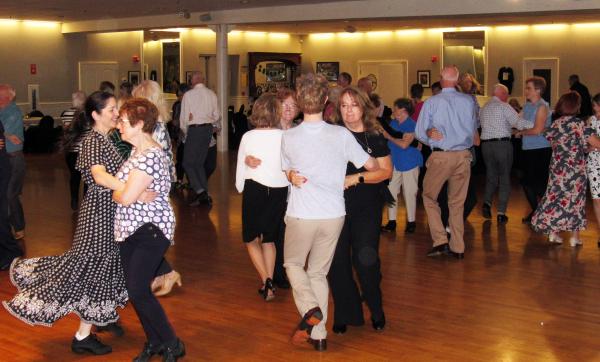
The 50-year celebration for Boston's Hanafin-Cooley-Reynolds branch of Comhaltas Ceoltóirí Éireann on Oct. 10 featured plenty of set dancing.
When attendees to the Oct. 10 50th anniversary gala for the Boston branch of Comhaltas Ceoltóiri Éireann sat down at their tables in the Irish Social Club of Boston, they found something very important next to the floral centerpiece: a list of set dances planned for the event, such as “Connemara,” “Kilfenora,” “Antrim Squares” and “Two-Hand Reels,” plus a couple of waltzes.
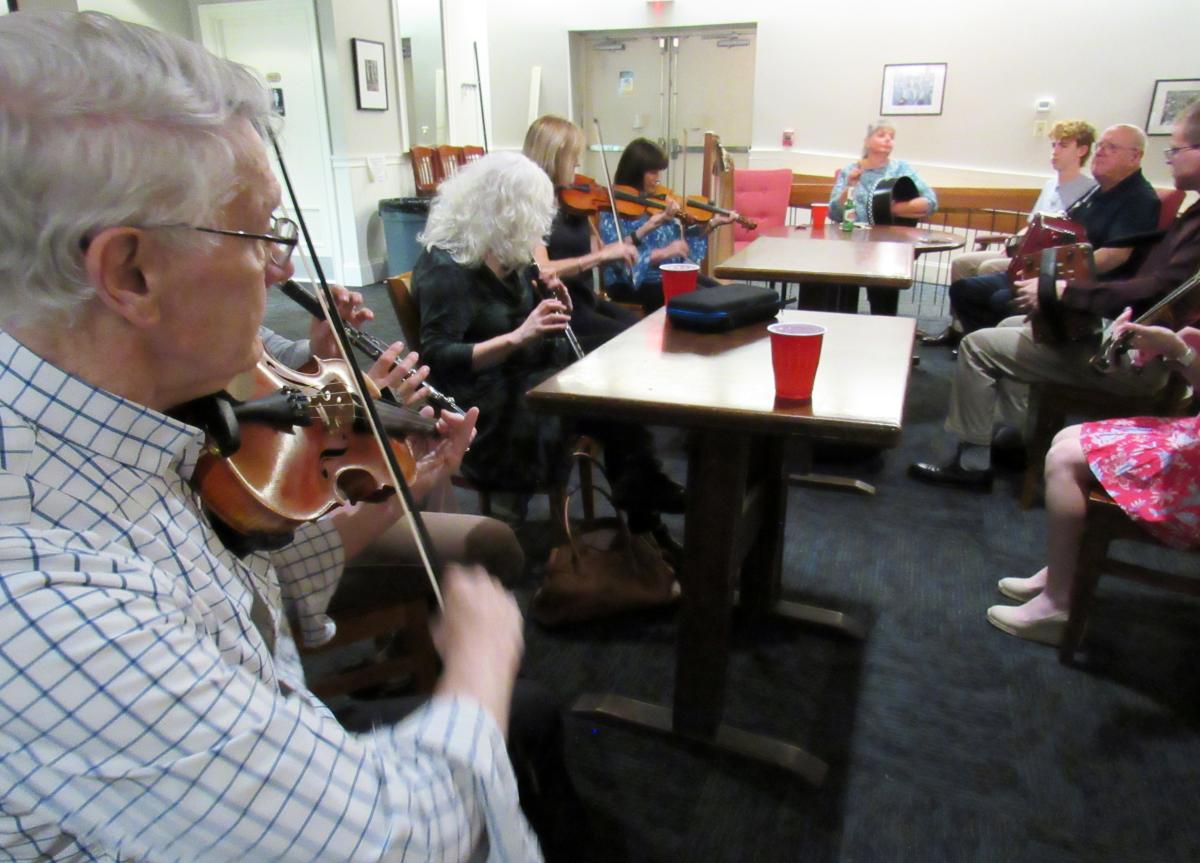
Sure enough, after branch treasurer Michael Hickey finished his welcoming remarks, he grinned and shouted “Hit the floor!” and couples left their seats en masse to form sets. A ceili band comprising two fiddles, flute, accordion, piano and drums struck up a medley of reels, and the dancers went through their paces.
The party was well and truly under way.
Of course, there is more to CCÉ Boston – known as the Hanafin-Cooley-Reynolds branch of the world-wide Irish cultural organization – than set dancing, which is taught weekly from September to May. A fully volunteer-led non-profit, CCÉ Boston is historically among the larger of the more than 400 Comhaltas branches worldwide and one of the oldest in North America; Comhaltas itself was established in 1951 and expanded into North America in 1972. Comhaltas Boston’s music school, founded almost three decades ago, provides instruction (in-person or via Zoom) across ages and levels for fiddle, flute, whistle, accordion, tenor banjo and other instruments, as well as Irish song. The branch also offers Irish language classes in partnership with Cuman na Gaeilge. CCÉ Boston scholarships support music school students and branch members studying Irish traditional music, song, dance and culture. (Non-members are able to participate in most branch activities, too.)
Members will tell you that Comhaltas Boston is about socializing and friendship – no small matter in an age where isolation and loneliness has become a major mental health concern in America. Whether you have Irish ancestry or not, the opportunity to explore Irish culture is rewarding in and of itself, they say, and being able to share this with others even more so, especially at the branch’s monthly ceili at the Canadian American Club in Watertown.
“A big part of getting people involved with music and dance traditions is helping keep the community together,” said Alanna Callendrello, who has been the branch president since 2024, and also helps lead the weekly set dance workshops. “Perhaps you’re a member and you have a friend who is learning an instrument at the music school or participates in the set dances, or your child is taking fiddle lessons and you make friends with another family whose kid is doing the same thing – that just makes the experience all the more richer. Maybe you have a family member, friend or acquaintance who’s part of a Comhaltas chapter somewhere else in the US or the world. You feel connected to something that’s bigger than you might imagine.”
A Boston-area native, Callendrello began step dancing as a child, but mostly did so in competitions during visits to Ireland, and then “aged out” at 18. After moving away from the Boston area for a while, she returned and took up step dancing again, but broadened her interest to include set dancing.
Hickey, who joined in the mid-1980s, was emphatically not a musician: “I tried piano when I was seven years old,” he laughed, “and I was so relieved when my parents said, ‘It’s OK, you don’t have to do it anymore.” He had heard about set dancing, and when he tried out the weekly class he found it to his liking and joined the branch.
“I originally came to listen to the music,” said Barbara Boyd, a longstanding member at four decades, “then when I saw the dancing, I just had to learn it.”
Now, Boyd is the one who runs the set dance classes, and she’s pretty good at recruiting, too.
“Barb forced me to come,” chuckles her friend Nancy Scorzella, a 10-year member. “So I went, and I just had a great time. The dancing is fun, and it’s also quite aerobic, so you get some exercise. And the people are wonderful.”
“It’s the people who keep you coming back,” agreed former president Tara Lynch, who joined Comhaltas Boston in 1991. “Comhaltas doesn’t 100 percent consist of Irish or Irish-Americans, and that’s part of what makes it such a fascinating and enjoyable thing: But what unites us all is being interested in Irish culture, and enjoying it together.”
A member of Comhaltas branches in Ireland, England and New Jersey, Lynch said that while CCÉ as a rule is characterized by close familial, friend and neighborly ties, “in Boston, it’s on steroids.”
She added, “The important thing is how you enjoy those connections: the craic, the songs, the stories, the yarns, the fun of simply being together. You can just escape from the outside world into the Can-Am [Canadian American Club].”
CCÉ Boston is mindful not only of Irish tradition in general but its own as well, as reflected in the branch name, which honors three mainstays in Greater Boston’s Irish music scene down through the years: Michael Hanafin, Joe Cooley and Larry Reynolds Sr. In addition, the CCÉ Northeast Region branch – of which Boston is part – has a Hall of Fame that includes many local musicians, dancers, and community leaders who have contributed to the preservation of traditional Irish music.
Mention a name like Reynolds at a CCÉ Boston gathering, and the stories roll out. Hickey, for example, has been the branch treasurer for 25 of its 50 years (he’s enshrined in the Hall of Fame): “Larry tapped me for the job,” he said. “He felt I would be good at it, and I guess things worked out pretty well.”
In addition to his various roles in co-founding CCÉ Boston and championing Irish music in Boston, and elsewhere, Reynolds could help out in other, neighborly ways: “If my mom wasn’t able to go to a ceili,” recalled Callendrello with a laugh, “Larry would tell her everybody who I danced with.”
Callendrello says there are currently about 220 active members in CCÉ Boston, a number that has fluctuated up or down over the years for one reason or another. Not surprisingly, the COVID pandemic had a serious impact on the chapter and its activities.
“It just got easier for people to say ‘no’ to going out during COVID and then afterwards it could be hard getting back to what they were doing – that was true for a lot of things, of course,” she said. “We’re building back up, and it’s taking a while, but we’re hanging in there. We’re just glad to have such a great group of people who give their support and make it possible to keep Irish culture alive.”
For information on the Comhaltas Hanafin-Cooley-Reynolds branch, see https://cceboston.org/